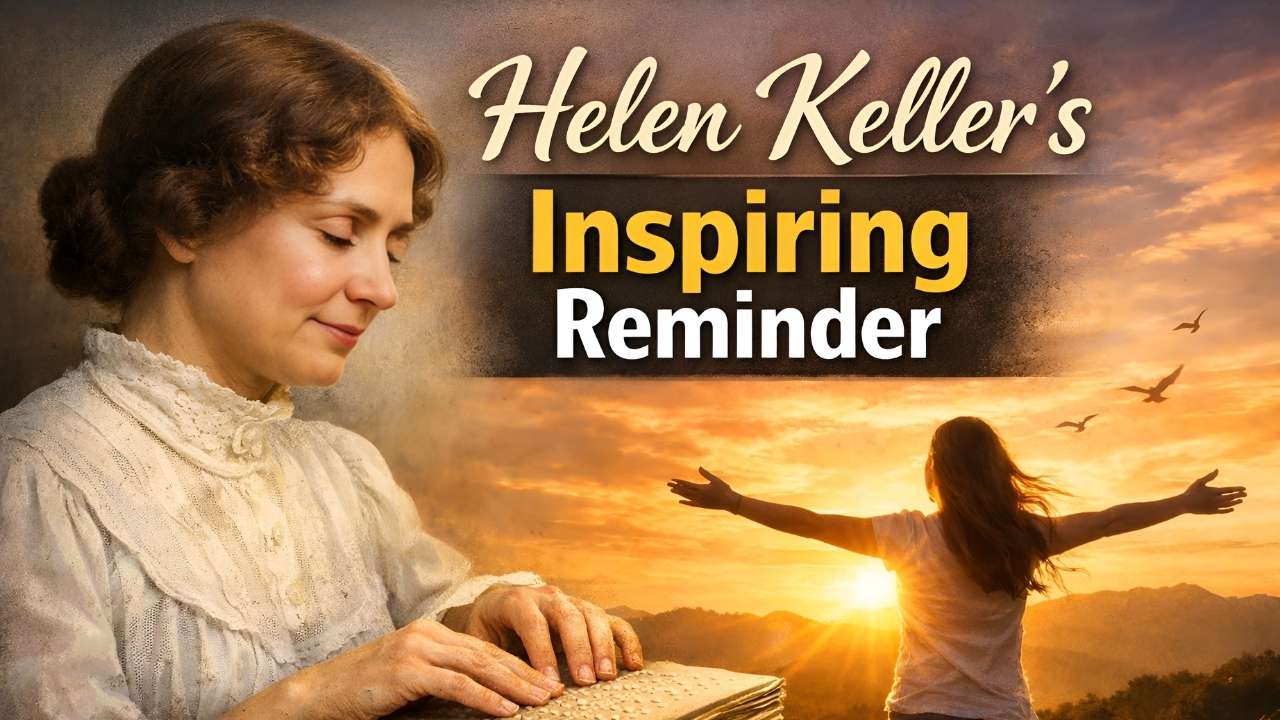
Helen Keller’s Inspiring Reminder: Helen Keller’s story is one of the most remarkable in history. Born in 1880, she lost her sight and hearing at just 19 months old due to illness. What could have been a life of isolation became instead a journey of resilience, learning, and inspiration. With the help of her teacher Anne Sullivan, Keller learned to communicate, read, and eventually speak. Her achievements remind us that even in the deepest darkness, there are wonders waiting to be discovered.
Finding Light in Darkness
Keller often spoke about the beauty she found in the world despite her disabilities. She believed that darkness was not only a limitation but also a source of strength. By living without sight and sound, she developed a profound appreciation for touch, imagination, and inner vision. Her perspective teaches us that challenges can reveal hidden wonders if we approach them with courage and curiosity.

The Power of Perseverance
Helen Keller’s life was defined by perseverance. Learning to communicate through finger spelling and Braille required immense patience and determination. Yet she never gave up. Her persistence allowed her to graduate from college, write books, and become a global advocate for people with disabilities. Her example shows that perseverance transforms obstacles into opportunities.
Lessons in Gratitude
Keller often expressed gratitude for the world she experienced through touch and imagination. She found joy in the warmth of the sun, the fragrance of flowers, and the companionship of friends. Her gratitude reminds us that even when life feels dark, there are wonders to appreciate. Gratitude shifts our focus from what we lack to what we have, creating a sense of peace and fulfillment.

Darkness as a Teacher
For Keller, darkness was not only a challenge but also a teacher. It taught her patience, empathy, and resilience. She believed that adversity reveals character and strengthens the spirit. Her life encourages us to see difficulties not as punishments but as lessons. Darkness can guide us toward growth, compassion, and wisdom.
Inspiring Generations
Helen Keller became a symbol of hope for millions. Her speeches and writings inspired people to overcome their own struggles. She showed that limitations do not define us; our response to them does. Generations have drawn strength from her reminder that even in darkness, there are wonders to be found. Her legacy continues to inspire those facing challenges today.

The Role of Imagination
Imagination played a central role in Keller’s life. Without sight or sound, she relied on imagination to understand the world. She envisioned beauty, connection, and possibility. Imagination allowed her to transcend her limitations and live fully. Her example teaches us that imagination is a powerful tool for overcoming obstacles and creating meaning.
Darkness in Everyday Life
We all face moments of darkness, whether through loss, failure, or uncertainty. Keller’s reminder encourages us to look for wonders even in those times. A setback may reveal hidden strengths. A loss may deepen our appreciation for love. Darkness can be a space for reflection, growth, and renewal. By embracing it, we discover resilience and hope.

Applying Keller’s Wisdom Today
In today’s fast-paced world, challenges often feel overwhelming. Helen Keller’s wisdom remains relevant. When faced with difficulties, we can choose to see them as opportunities for growth. We can cultivate gratitude, imagination, and perseverance. By doing so, we find wonders even in the darkest moments. Her life is a guide for living with courage and optimism.
Conclusion
Helen Keller’s inspiring reminder that even darkness has its wonders is a timeless lesson. Her life shows that adversity can reveal strength, gratitude, and imagination. Darkness is not the end but a beginning, a teacher, and a source of hidden beauty. By embracing her wisdom, we learn to see challenges as opportunities and to find joy even in difficult times. Keller’s legacy continues to shine, proving that even in darkness, there is light, hope, and wonder.