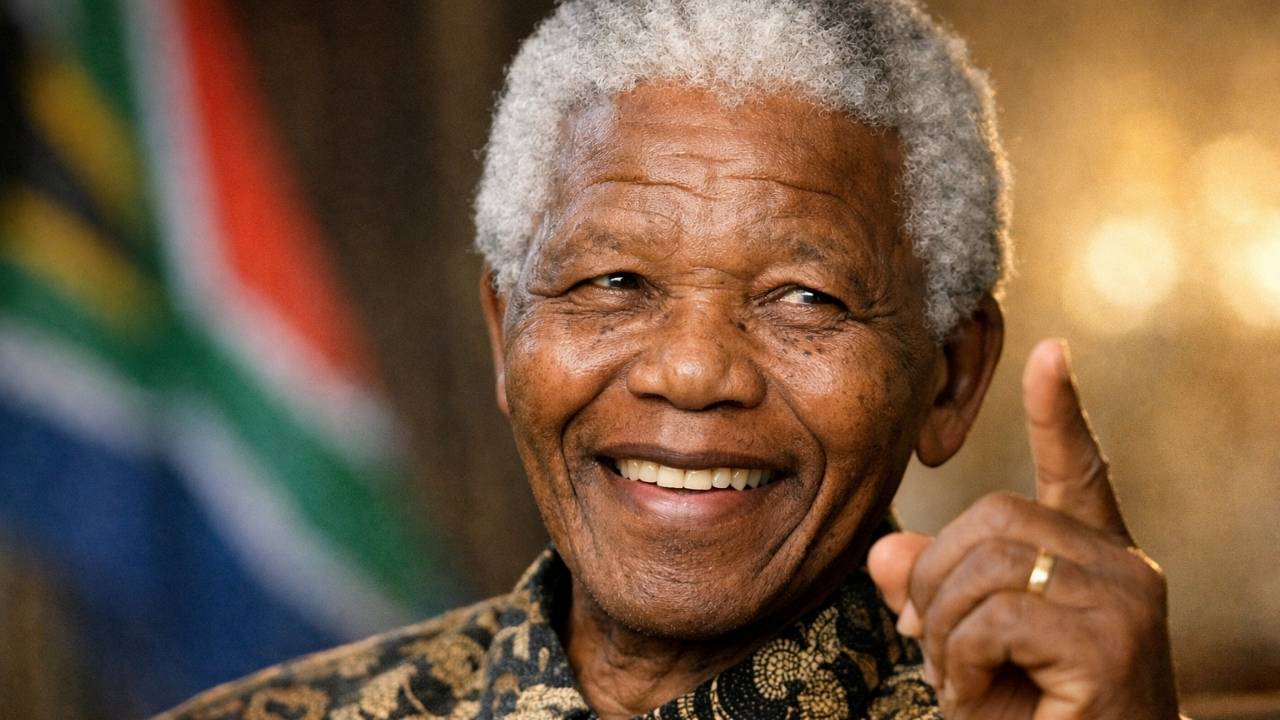
Nelson Mandela’s Powerful Reminder: Nelson Mandela’s journey is one of the most inspiring stories of the twentieth century. Born in South Africa in 1918, he grew up under a system of racial segregation known as apartheid. His life was marked by struggle, sacrifice, and resilience. Despite spending 27 years in prison for opposing injustice, Mandela emerged not with bitterness but with hope. His ability to choose hope over fear became a guiding principle for his leadership and legacy.
Hope as a Force for Change
Mandela believed that hope was stronger than fear. Fear divides, paralyzes, and prevents progress, while hope unites, motivates, and inspires action. By choosing hope, Mandela encouraged people to believe in the possibility of a better future. His vision of a democratic South Africa was built on the belief that hope could overcome centuries of oppression. This philosophy remains relevant today, reminding us that hope is the foundation of meaningful change.

Fear as an Obstacle
Fear is a natural emotion, but when it dominates, it limits growth. Mandela understood that fear could prevent people from standing up against injustice. Fear of punishment, rejection, or failure often keeps individuals silent. Yet Mandela showed that courage is not the absence of fear but the decision to act despite it. His life teaches us that overcoming fear is essential to achieving freedom and justice.
Choosing Hope in Prison
Mandela’s years in prison were a test of his spirit. Isolated from his family and the outside world, he could have surrendered to despair. Instead, he chose hope. He used his time to reflect, learn, and prepare for leadership. His hope sustained him and inspired others to continue the struggle outside prison walls. This choice demonstrates that hope can thrive even in the darkest circumstances.

Hope in Leadership
When Mandela became president of South Africa in 1994, he faced the challenge of uniting a deeply divided nation. Fear and anger could have fueled revenge, but Mandela chose reconciliation. He promoted forgiveness, dialogue, and unity. His leadership showed that hope is not passive but active. It requires vision, courage, and commitment. By choosing hope, Mandela transformed fear into progress and built a foundation for peace.
Lessons for Everyday Life
Mandela’s reminder to choose hope over fear applies to everyday challenges. Whether facing personal setbacks, professional struggles, or social issues, hope provides strength. It encourages us to keep moving forward, even when fear whispers that failure is inevitable. By choosing hope, we open ourselves to possibilities and solutions that fear would hide from us.

Hope in Relationships
Fear often damages relationships, creating mistrust and distance. Mandela’s philosophy teaches us that hope can heal and strengthen bonds. Hope allows us to believe in forgiveness, growth, and renewal. In families, friendships, and communities, choosing hope fosters understanding and unity. It helps us see beyond mistakes and focus on potential.
Hope in Society
Societies often face fear in the form of conflict, inequality, or uncertainty. Mandela’s example shows that hope can guide nations toward progress. Hope inspires movements for justice, equality, and peace. It motivates people to work together for common goals. By choosing hope, societies can overcome fear-driven divisions and build inclusive futures.

The Courage to Hope
Choosing hope requires courage. It means believing in possibilities even when evidence seems scarce. Mandela’s courage to hope in the face of oppression inspires us to do the same. Courageous hope is not naive; it is a deliberate choice to trust in the power of resilience and human dignity. It is the belief that tomorrow can be better than today.
Applying Mandela’s Wisdom Today
In today’s world, fear often dominates headlines and conversations. Economic uncertainty, political conflict, and global challenges can create anxiety. Mandela’s wisdom reminds us to resist fear and embrace hope. By choosing hope, we find strength to face challenges, creativity to solve problems, and unity to build better communities. His reminder is timeless and essential for navigating modern life.

Conclusion
Nelson Mandela’s powerful reminder to choose hope over fear is a lesson for all generations. His life shows that hope can overcome oppression, heal divisions, and inspire progress. Fear may be natural, but it should never control our choices. By choosing hope, we embrace courage, resilience, and vision. Mandela’s legacy continues to guide us, proving that hope is the most powerful force for building a better world.